


Neighborhood Egg Incubator, 12 Eggs Capacity
Neighborhood Egg Incubator, 12 Eggs Capacity
SKU: 707-NBH-PH12A
In stock
Couldn't load pickup availability
Description
Description
- Automatic Egg Turning with Customizable Settings: Enjoy hassle-free egg incubator for hatching with 360° automatic egg turning. Choose from 6 turning intervals ranging from 60 to 210 minutes and set incubation periods from 1 to 99 days. The turning function automatically stops during the final 4 days before hatching to help maintain a stable environment for successful hatch rates.
- Accurate Temperature Control & Audible Alerts: This egg hatching incubator maintain ideal incubation conditions with adjustable temperatures from 68°F to 104°F in precise 0.1°F increments. The easy-to-read digital display provides real-time monitoring, while a built-in alarm notifies you if the temperature varies by more than 2°F from your selected setting.
- Smart Humidity Management with External Water Refill: Designed for consistent humidity control, this automatic egg incubator with auto water replenishment system allows you to add water from outside without opening the lid and disrupting the incubation environment. Humidity can be adjusted from 20% to 75%, and an audible alert warns you if humidity remains more than 10% away from the target level after 2 hours of operation.
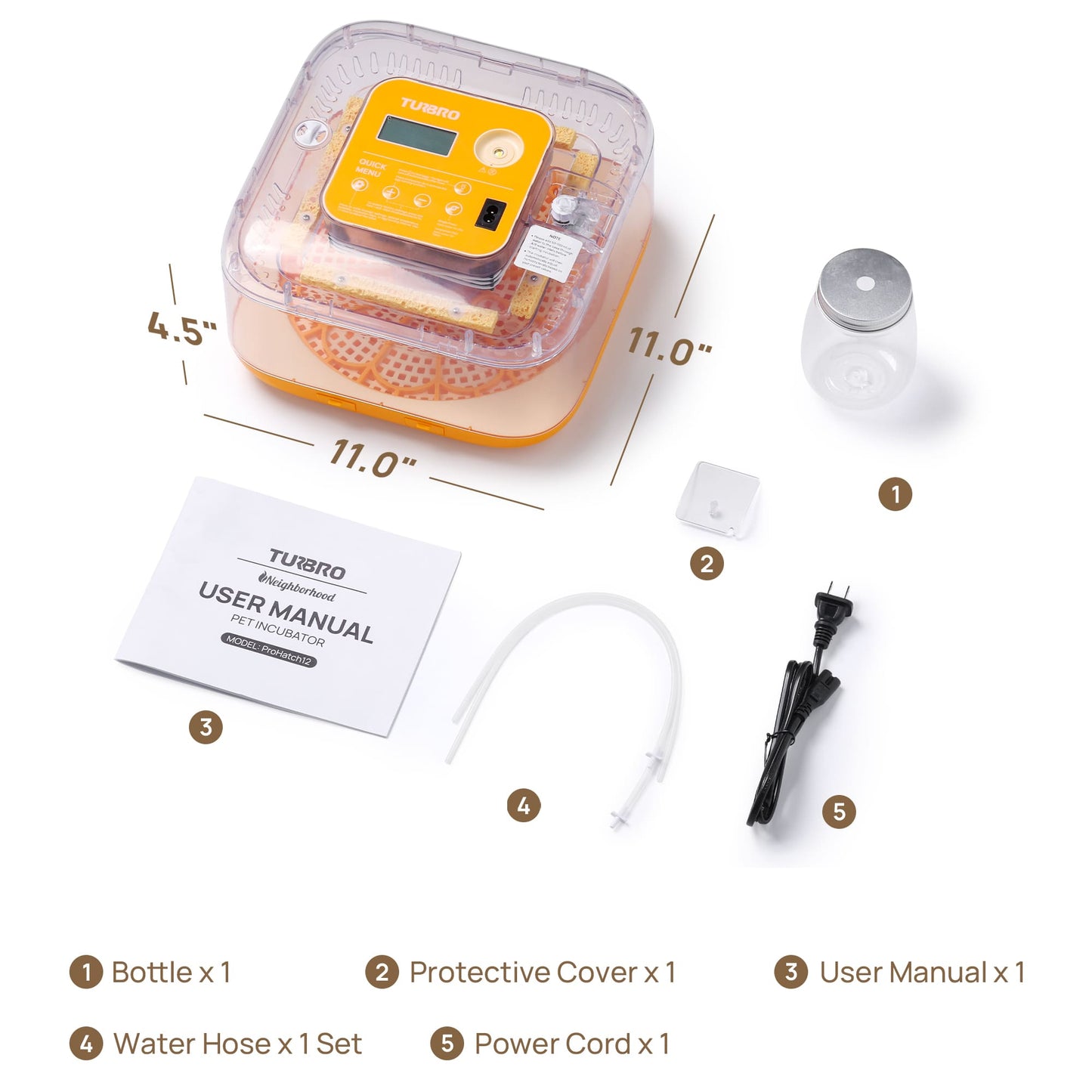
- 360° Viewing & Easy Cleaning: Smart chick incubator can monitor every stage of development through the transparent viewing window without disturbing the eggs. The built-in egg candler makes it easy to observe embryo growth and viability. Removable egg trays, support grids, and base components are washable for convenient cleaning between incubation cycles.
- Adjustable Capacity for Multiple Bird Species: This incubator for hatching eggs with 8 adjustable dividers create customized compartments for different egg sizes. Holds up to 12 chicken eggs, 10 duck eggs, or 24 quail, pigeon, or parrot eggs. Ideal for classrooms, family projects, homesteads, bird breeding, hobby farms, and small-scale poultry operations.
Manuals
Manuals




FAQ
What's the difference between automatic and manual egg turning?
Manual turning cannot simulate natural incubation well, which may cause uneven heating and embryo sticking. It is also easy to forget to record the incubation days. Automatic turning handles the entire process and improves the hatching success rate.
Where is the best place to put the incubator? Will it work in my home?
Despite the incubator maintaining internal stability, keep it in a stable room temperature (74-80°F is ideal), and avoid cold floors and drafts. Save the packaging foam! If the room temp drops below 68°F, wrap it around the unit for insulation.
How long does it take for the eggs to hatch?
Reference durations: Quail 18 days, Chicken 21 days, Duck 28 days, Goose 30 days. Actual duration depends on egg type, temperature, and humidity. Results may vary, so research or consult experienced breeders beforehand.
Can I hatch different types and sizes of eggs together?
The egg tray can fit different egg sizes. However, we don't recommend hatching different species at a time because they need different incubation times, temperatures, and humidity levels.
What should I pay attention to before using it?
Use only fertilized eggs (unwashed, unrefrigerated). Before adding the eggs, we also suggest running the unit for 2 hours to verify stable temperature and humidity settings.
Can I open the incubator during incubation?
Only if necessary. Each time the lid is opened, the temperature and humidity inside drop, disrupting the stable incubation environment and affecting egg development.
How often do I need to add water?
The water bottles we provide are transparent for easy water level checks. During daily use, monitor the water level to avoid it running too low. We recommend refilling it every three days, adjusting based on your actual usage conditions.
How do I know if eggs are developing properly?
The unit comes with a built-in egg candler, and you don't need to buy any extra monitoring tools. Taking chicken eggs as an example, we recommend:
- Days 7-8 (First Candling): Check embryo development. Normally, you can see clear, spiderweb-like blood vessels spreading from the center, and sometimes a moving dark spot (the embryo).
- Days 14-15 (Second Candling): Check embryo vitality. Normally, the network of blood vessels will be denser, and the dark shadow (the embryo) will be much larger, occupying most of the egg. You might see the shadow moving.
- Day 18 (Final Candling): Confirm survival and prepare for hatching. Normally, the egg will appear mostly dark and opaque, with only the air cell at one end visible and bright. This means the chick is fully formed and filling the egg.
Important Tips:
- Wash your hands before candling to avoid transferring bacteria to the eggshell.
- Be quick! Keep each candling session under 5-10 minutes to avoid the eggs cooling down too much.
- Development speed varies by egg type. The timings above are for chicken eggs and are for reference only.
When should I stop turning eggs before hatching?
You don't need to do anything manually. The machine will automatically stop turning eggs for the final 4 days. For example, for a 21-day cycle, turning stops on day 18.
What do I do on hatching days?
After the automatic turning stops, gently remove the egg frame to give the chicks ample space to hatch. Close the lid and open the ventilation switch on the lid. Keep hatched chicks warm, e.g., by moving them to a dedicated brooder.
Is it normal for the incubator to keep running after the set number of days?
Yes. Hatching times can vary between individuals. The continued operation provides a stable environment for unhatched chicks. It also prevents hatched chicks from freezing or suffocating in the incubator if they are not removed in time.
Comparison Chart
|
Model |
ProHatch12 |
ProHatch24 |
|
Voltage |
100-120 V 60 Hz |
|
|
Rated Power |
40 W |
55 W |
|
Max Capacity |
12 Chicken eggs |
24 Chicken eggs |
|
Water Supply Bottle |
1 |
2 |
|
Water Adding Method |
Built-in water pump |
Automatic watering by gravity |
|
Humidity Control |
Adjustable, 20-75% (1% steps) |
Fixed at 55% (not adjustable) |
|
Adjustable Temperature Range |
68-104°F (0.1°F steps) |
|
|
Turning Interval |
60, 90, 120 (default), 150, 180, 210 min |
|
|
Day Counter |
1-99 Days (every 24h as 1 day) |
|
|
Temperature Alarm |
±2°F Deviation |
|
|
Humidity Alarm |
±10% Deviation (after 2hrs operation) |
<40% (after 2hrs operation) |